A Nordic Opportunity: Leading with integrity on Africa’s real challenges - Every life matters - Objectivity in the Eastern DRC crisis
The Nordic countries have long championed values of equity, justice, and the inherent dignity of every human life. These principles, embedded in their welfare states and foreign policies, have long served as a model for governance and international cooperation. For decades, the Nordic community has also been a beacon for freedom and cross-border cooperation. They served as an example for the formation of the European Union, demonstrating that unity and shared values can drive prosperity and peace.
It is in this spirit that I urge our Nordic partners to uphold these values in their approach to Africa—particularly in their engagement with Rwanda and the Great Lakes region.
Now, as one of its own prepares to assume key leadership roles in the United Nations Security Council and the European Union presidency, the Nordic community has a unique opportunity to demonstrate leadership in values that Rwanda also deeply upholds. However, this requires moving beyond repetitive slogans and politicised narratives that some European countries have unfortunately embraced regarding Rwanda and the Democratic Republic of Congo (DRC).
It is perplexing that, after decades of instability in the DRC, Rwanda is now being portrayed as the principal cause of its neighbour’s persistent governance failures. The massacres, displacements, and state-sponsored discrimination against Congolese Tutsi began long before President Paul Kagame assumed leadership in Rwanda.
Why, then, has the international community largely ignored the Congolese state’s failure to protect its own citizens for decades? Why was there no outrage when Congolese Tutsi were burned alive, cannibalised, and systematically targeted?
Why did the world remain silent when Congolese leaders openly incited violence against their own people, when MONUSCO turned a blind eye to, or even supported, FDLR—a genocidal militia responsible for the deaths of countless innocent civilians?
The selective concern for the crisis in eastern Congo raises difficult questions about global priorities. Why does the international community react with urgency now, while disregarding similar suffering elsewhere in the DRC?
What explains the reluctance to hold the DRC government accountable for its failings, or the over 150 armed groups wreaking havoc in its territory? Is the goal truly peace and stability, or the preservation of a convenient geopolitical narrative?
During my diplomatic engagements across the Nordic region, I have observed a concerning pattern. Many government offices and policymakers rely on superficial briefings that reduce complex regional dynamics to a single talking point: the so-called “Rwandan support for M23.” Yet, when I ask officials to define M23, few can provide an informed response. How can meaningful policy be shaped by such a shallow understanding? M23 did not emerge from a vacuum; it is the product of historical injustices, rooted in the unresolved consequences of colonial borders, displacement, and discrimination. Reducing their struggle to a mere geopolitical pawn erases the humanity and legitimate grievances of these communities.
The Rwanda Defence Force (RDF) has been wrongly accused of committing sexual assault and rape in the Democratic Republic of the Congo (DRC). In reality, it is the DRC's own undisciplined army that has been consistently implicated in these heinous crimes. Reports from various human rights organizations have documented widespread sexual violence perpetrated by elements of the Congolese armed forces, yet the blame is often misdirected toward the RDF without credible evidence.
Furthermore, the RDF has a strong record as a disciplined and effective peacekeeping force. It has successfully participated in missions in Haiti, the Central African Republic, Mozambique, and Sudan receiving international praise for its professionalism and commitment to civilian protection. If the RDF has demonstrated such discipline and integrity in multiple conflict zones, why would it engage in sexual violence exclusively in the DRC? This contradiction raises serious questions about the motivations behind these accusations.
Additionally, the narratives surrounding gender-based violence in the region must be scrutinized. For example, the issue of fistula cases in eastern DRC is often presented as solely the result of sexual violence. While conflict-related sexual violence is a serious concern that must be addressed, it is misleading to ignore the broader healthcare failures that contribute to the crisis. The primary cause of fistula in the DRC is not just sexual violence but an underdeveloped health system that lacks adequate maternal care, leading to prolonged and obstructed labor. Without proper medical interventions, preventable childbirth injuries become widespread, exacerbating the suffering of women.
Presenting an incomplete story does not serve the cause of justice; rather, it perpetuates misinformation. A more objective and evidence-based approach is necessary to ensure accountability and address the real issues affecting the region.
Nordic countries have made strong commitments to Africa, launching ambitious strategies to foster partnerships based on mutual respect and shared progress. However, these commitments will be judged not by rhetoric, but by action. The younger generations of the Nordic region, including future medical professionals, economists, and policymakers, will one day scrutinize how their leaders engaged with Africa. They will ask why a resource-rich country like the DRC has struggled to provide basic welfare for its people, combat corruption, and build sustainable institutions. They will also ask why Rwanda, a nation that has overcome one of history’s darkest tragedies to become a beacon of development and stability, has been unfairly vilified.
To the Nordic media, I offer a challenge: do not merely echo pre-packaged narratives. Investigate, question, and provide balanced reporting. Your societies pride themselves on journalistic integrity—apply the same rigor when covering Africa. The world is watching, and history will judge whether you chose the path of truth and balanced inquiry or the ease of repeating convenient narratives.
Nordic values demand more than just slogans. They demand fairness, critical thinking, and the courage to stand against injustice, no matter where it occurs. This is the standard that the people of Rwanda—and indeed, all of Africa—expect from our partners.
Topics

Harvesting Two Decades of Cooperation and Partnership: Rwanda and the Nordics

Sweden Launches New Development Cooperation Strategy for Rwanda 2026–2031
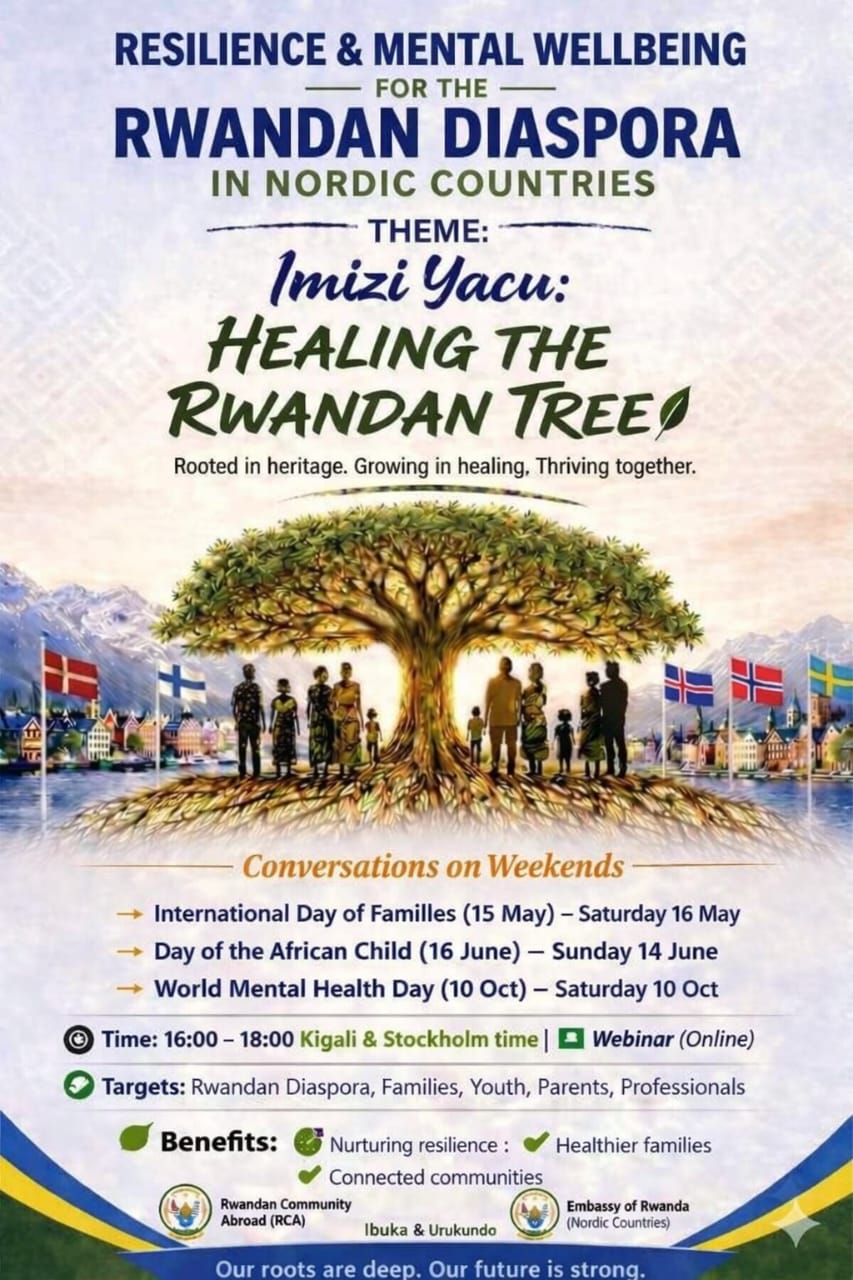
IMIZI YACU: Healing the Rwandan Family Tree Across the Nordic Countries
Embassy Visits Uppsala Centre for Holocaust and Genocide Studies, Exploring Pathways for Academic Collaboration

Seminar on Remembrance, Unity and Renewal Held at Umeå University
