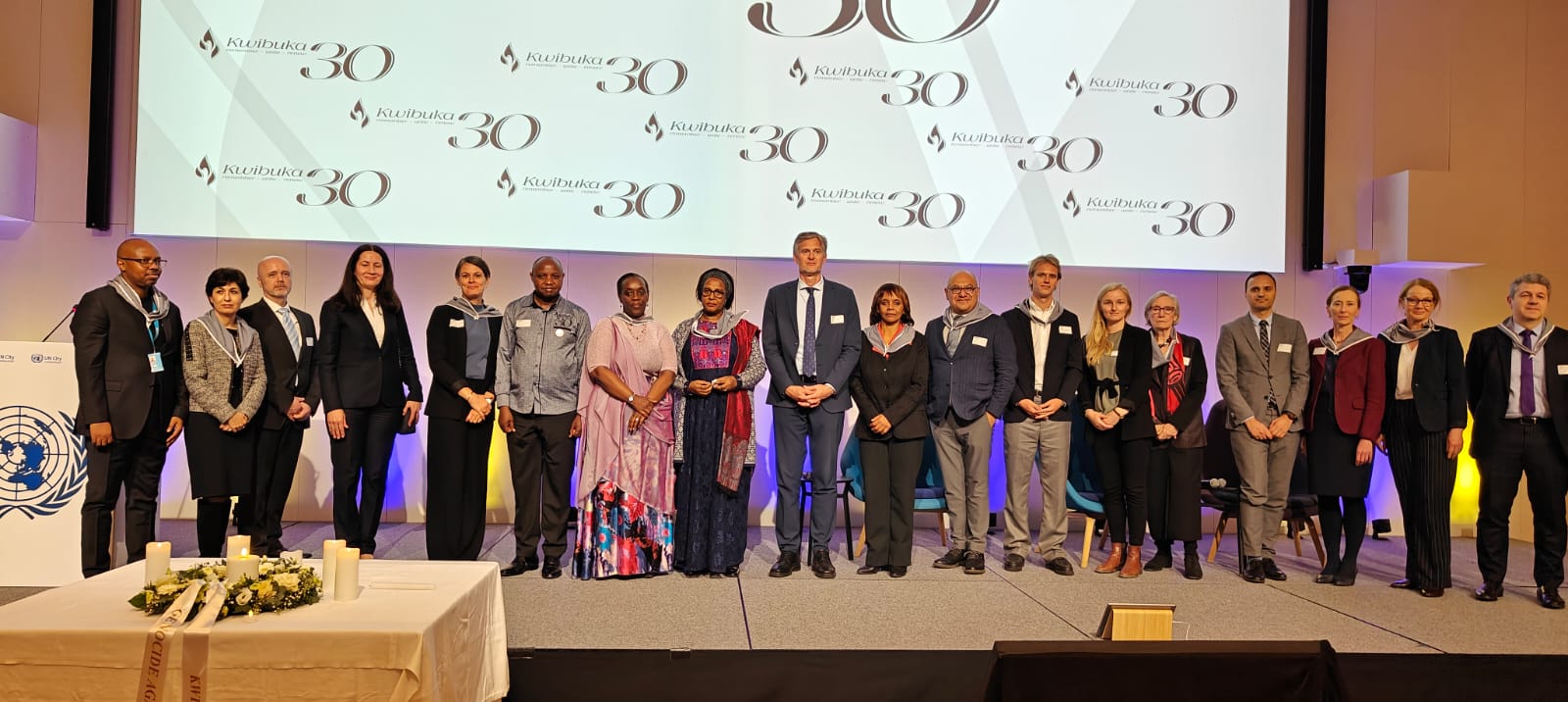
Kwibuka30 in Denmark: Over 250 Rwandans, members of the Diplomatic Corps, and Heads of UN institutions convened in Denmark to commemorate the 30th anniversary of the 1994 Genocide against the Tutsi in Rwanda.
On 8th April 2024, Ibuka Denmark, the Rwandan community in Denmark, and the Embassy of
Rwanda to the Nordics organized the 30th Commemoration of the 1994 Genocide against the
Tutsi in Rwanda at UN City Copenhagen. The event attracted over 250 guests, including Heads
of Missions, the Ambassador of Denmark to Rwanda based in Uganda, representatives from the
Danish government, members of parliament, and friends of Rwanda.
Mr. Egide Victor Semukanya, President of Ibuka Denmark, emphasized to attendees the role of
Rwanda's genocidal government in sowing division and hatred among Rwandans, culminating
in the targeted killings of Tutsis during the 1994 Genocide against the Tutsi. He credited the
survival of many to the courageous efforts of RPF Inkotanyi. Semukanya urged survivors to
acknowledge the common purpose they share with their rescuers and motivated them to persist
in their contributions to the nation's reconstruction through reconciliation and unity, ensuring a
brighter future for generations to come.
Ambassador Dr. Diane Gashumba, in her address, expressed gratitude to the numerous Heads
of Missions and diplomatic corps for their participation in the 30th Commemoration of the 1994
Genocide against the Tutsi in Rwanda. She lamented that some countries mislabel Rwanda's
history as a mere civil war. Today, she observed, certain leaders from these nations
unabashedly harm Rwandans, distort the truth, and seek to dictate the direction of Rwanda's
governance.
Ambassador Diane commended President Paul Kagame's leadership, which has prioritized the
unity of Rwandans, the profound healing from trauma, and the eradication of any forces that
could regress Rwanda. Echoing President Kagame's words, she emphasized that truth will
always prevail over falsehoods, stating "Les faits sont têtus".
She addressed the often-overlooked truths of the killings in 1959, 1961, and 1963, which
resulted in innocent Tutsis fleeing and seeking refuge in neighboring countries. She highlighted
the discrimination and persistent threats faced by the Tutsis who remained in Rwanda, spanning
schools, leadership roles, the military, and various aspects of daily life. Ambassador Diane
pointed out the unfortunate requirement for national identification cards to specify ethnicity.
She underscored that the Genocide against the Tutsi was meticulously planned, witnessed
globally, and halted by the intervention of the RPF Inkotanyi forces, led by H.E President Paul
Kagame. Under the guidance of RPF Inkotanyi, Rwanda achieved peace, welcomed back
refugees, removed ethnic classifications from identity cards, and ensured equal opportunities
and life chances for all Rwandans.
Ambassador Diane urged others to glean lessons from Rwanda's history and recovery. She
cautioned neighboring countries about the perils of perpetuating genocidal ideologies, citing the
ongoing violence against Kinyarwanda-speaking Congolese in the DRC as a poignant example.
The Ambassador of Denmark to Rwanda, H.E Signe Winding Alberg, representing the Danish
Government, stood alongside and comforted Rwandans during the solemn 30th
Commemoration of the 1994 Genocide against the Tutsi. She expressed gratitude to Rwandans
for their resilience in not succumbing to grief but instead dedicating themselves to forging a
unified and safe nation.
Ambassador was later joined by Ms. Leila Pakkala, Director of UNICEF Supply Division and Ms.
Ulla E. Müller, Director, the Nordic Representation Office for a panel discussion on "A call to
action in mitigating the suffering of women and children in deadly conflicts".
Ms. Leila Pakkala of UNICEF, responsible for providing humanitarian and developmental aid to
children globally, emphasized the agency's crucial role in fostering a culture of peace and
advocating for the vulnerable, particularly women and children.
Similarly, Ms.Müller underscored UNFPA's commitment to championing and safeguarding
women's rights, particularly in the face of rights violations and assaults. She lamented that
despite the global outcry of "Never Again" following the devastating loss of lives during the 1994
Genocide against the Tutsi, innocent lives continue to be lost worldwide.
Dady De Maximo Mwicira-Mitali, a resident of Denmark, shared a harrowing testimony of the
unimaginable atrocities he experienced during the 1994 Genocide against the Tutsi, which he
also documented in his book ‘‘Rwanda, un deuil impossible, effacement et traces’’. He
vehemently denounced those who deny or cast doubt on the universally recognized genocide
against the Tutsi. Such deniers, if given a platform, persistently propagate misinformation
against Rwanda's leadership and foster divisive ideologies.
The Kwibuka30 events in Denmark commenced with a walk to remember and a night vigil on
7th April. Rwandans and friends of Rwanda gathered to offer prayers, hear survivor testimonies,
and participate in a panel discussion on "The role of parents and youth in the diaspora in
preserving the memory of the 1994 Genocide against the Tutsi in Rwanda"
Topics

Harvesting Two Decades of Cooperation and Partnership: Rwanda and the Nordics

Sweden Launches New Development Cooperation Strategy for Rwanda 2026–2031
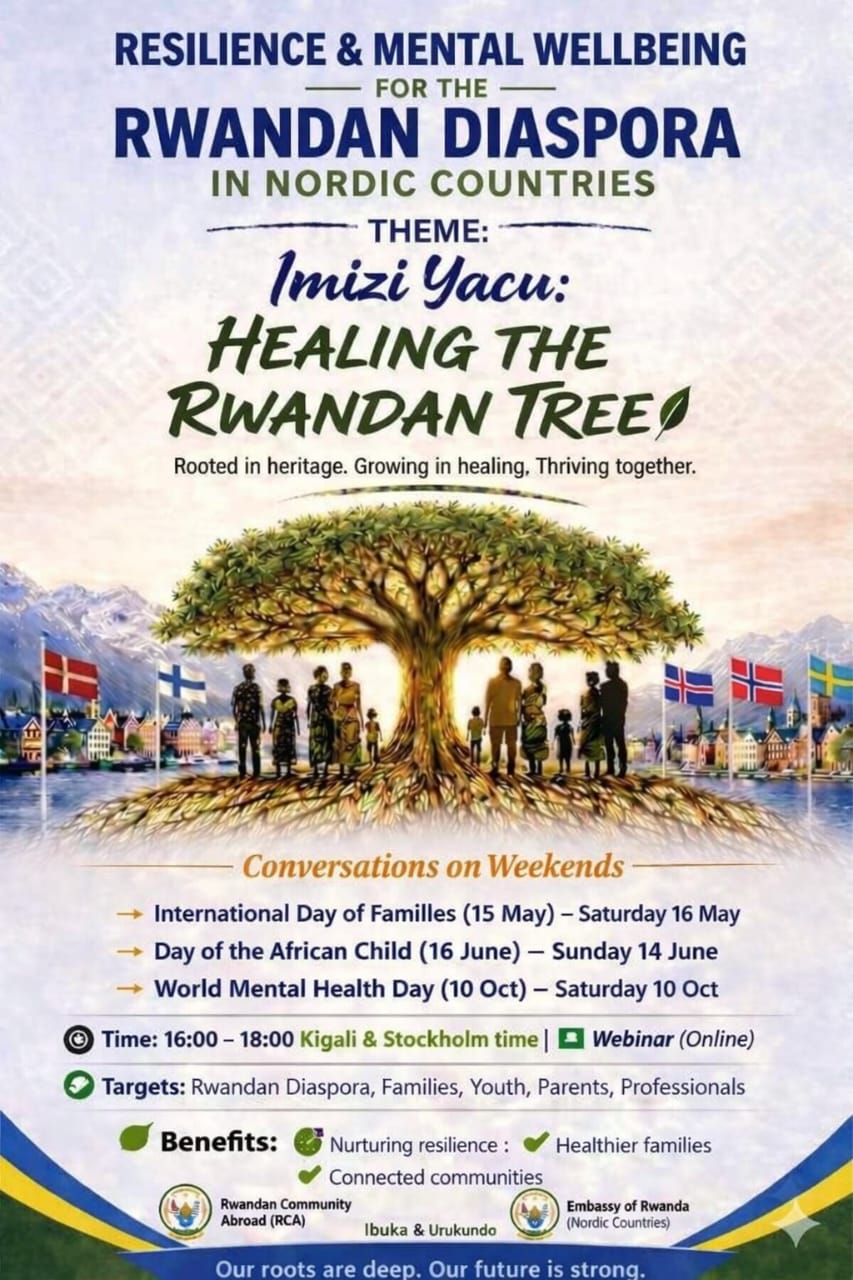
IMIZI YACU: Healing the Rwandan Family Tree Across the Nordic Countries
Embassy Visits Uppsala Centre for Holocaust and Genocide Studies, Exploring Pathways for Academic Collaboration

Seminar on Remembrance, Unity and Renewal Held at Umeå University
