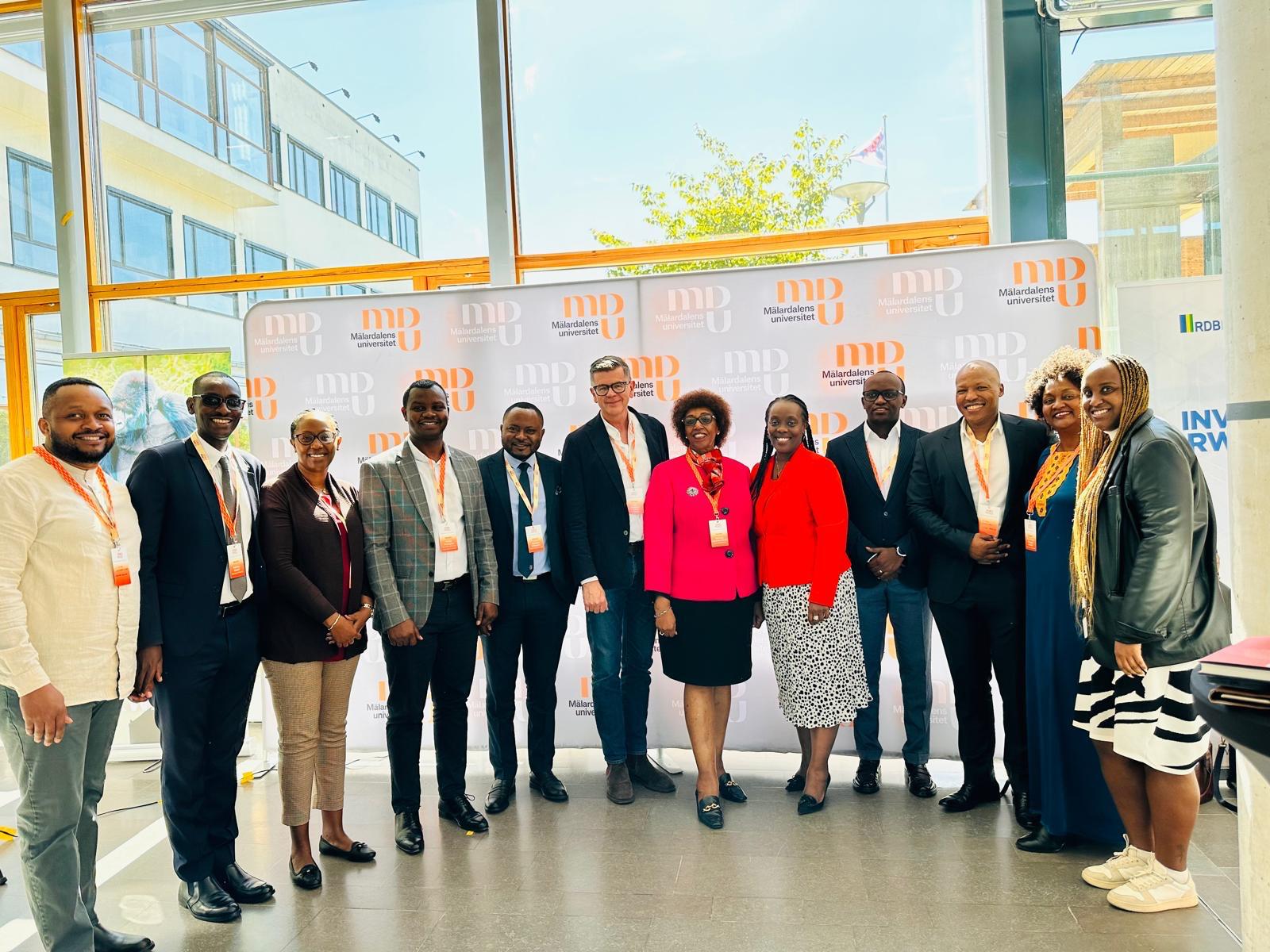
Sweden's Mälardalen University Hosts Its First International Week with a Special Focus on Rwanda
Mälardalen University (MDU), established in 1977 as a college and now Sweden's newest university, serves around 20,000 students studying courses and programs in Communication, Economics, Healthcare, Education, Engineering, Chamber Music, and Opera.
MDU's Vice Chancellor, Professor Martin Hellström, accompanied by Sara Arvidson, the Director of Communications, visited Rwanda for the first time during the 20th anniversary of Sweden–Rwandan research cooperation in March 2023.
"When I visited Rwanda last year, I was surprised and touched by the fact that the conference started with a visit to the Kigali Genocide Memorial, followed by a speech and a panel discussion about how the country has moved on after the genocide against the Tutsi. Not every country in the world deals with the dark sides of its history in such an open and explicit way. The genocide against the Tutsi in Rwanda took place between April and July 1994, claiming the lives of one million people. The international community was warned but chose to look away and did not intervene. In other words, the world community bears a great responsibility for the genocide against the Tutsi on several levels. Both the international action and the lack of action, with their disastrous consequences, cannot be ignored in this context," said Professor Martin Hellström, Vice Chancellor of Mälardalen University.
In the wake of the 30th commemoration of the 1994 genocide against the Tutsi in Rwanda, Mälardalen University (MDU) asked, "What can we learn from Rwanda?" with its first-ever International Week (15th - 17th May 2024), focusing on Rwanda. The MDU International Week, organized in collaboration with the Rwandan Embassy in Sweden, aimed to foster open and engaging dialogue on international collaboration to build a better world.
"This year, Mälardalen University’s International Week had a special focus on Rwanda. We commemorated the genocide against the Tutsi in Rwanda 30 years ago and honored the victims. We aimed to learn more about and from each other to develop knowledge through mutual cooperation between our countries. Together, we strive to make a positive impact on the sustainable development of our countries and the world," said Professor Martin Hellström, Vice Chancellor of Mälardalen University.
The program included three days of engaging discussions, workshops, networking opportunities, and musical performances. It kicked off with keynote speeches from Mr. Stefan Löfven, Former Swedish Prime Minister and Chair of the Stockholm International Peace Research Institute (SIPRI) Governing Board since June 2022, Former Deputy Special Representative for the United Nations Multidimensional Integrated Stabilization Mission in Mali, Mbaranga Gasarabwe Clotilde, Johanna Teague, Swedish Ambassador to Rwanda, Dr. Diane Gashumba, Ambassador of Rwanda to the Nordic Countries and Sweden's Equality Ombudsman, Lars Arrhenius, who grew up in Rwanda before the 1994 genocide against the Tutsi. He recently released a book, "Lejonmyran," which chronicles his childhood and the discrimination of Tutsi that he witnessed, but also looks to Rwanda's transformation story.
All emphasized learning from history to inspire global citizenship and reinforce the global commitment to the SDGs.
Throughout the week, participants engaged in various programs designed to foster deeper understanding and empathy. The sessions covered a broad range of topics, including Rwanda’s journey of reconciliation and development following the 1994 genocide against the Tutsi. The discussions were both moving and enlightening, offering valuable insights into how nations can overcome past tragedies to build a better future.
Dr. Raymond Ndikumana, Deputy Vice-Chancellor in charge of Strategic Planning & Administration at the University of Rwanda, along with professors Dr. Alphonse Muleefu and Dr. Alice Urusaro Karekezi, provided interventions on "What Can We Learn from Rwanda: A Blueprint for Reconciliation and Progress" and "How Do We Create a Society That Promotes Diversity and Inclusion?"
"In Rwanda’s genocide-torn polity and society, inclusion was more than just a catchword – it was a necessity for a country that wanted to regenerate and transform. The first step towards inclusion was made with the Rwanda Patriotic Front’s Declaration of Principles made public on 17 July 1994, thirteen days after halting the 1994 genocide against the Tutsi and defeating the genocidaires forces and their allies and ousting them from Rwanda, which made public its commitment to national unity and a pledge to seek accountability for massive violence that was followed by the abolition of the national identity with ethnic mention. Another important step towards inclusion is the nine monthly national dialogue held at the Presidency Office between March 1998 and May 1999. The catalog of people associated with the Village Urugwiro Meetings indicates that at least 164 personalities participated in these meetings throughout the nine months. Significantly, the audience gathered four generations of key political players from the colonial era to the Post-genocide period for the first time in the political history of Rwanda. The deliberations of these consultations made up the basis for the policy directions enshrined in what is known in Rwanda as Vision 2020. The spirit of the Urugwiro village." Dr. Alice Urusaro Karekezi, in a powerful intervention.
MDU students were joined by students from Carnegie Melon University-Africa and participated in a panel discussion on "What is the Role of Academia for Democracy and Sustainability in Challenging Times?" and "What Role Do Students Play as Tomorrow's Leaders?" The students of MDU showed a strong commitment to learning from the world and not repeating past mistakes. They also called on educators to continue fostering platforms where they can hear about other perspectives and world challenges.
Additionally, the program included a lecture by Freddy Mutanguha, CEO of Aegis Trust and Director of the Kigali Genocide Memorial.
MDU, with a strong AI department, also featured a panel, “AI for a Sustainable Future,” with IRCAD Africa's Managing Director, David Kamanda.
The three-day program ended with IRCAD Africa, represented by its President Dr. Kayondo King and MDU signing a MOU as the first step to collaborate as the first step to initiate a long-term partnership.
The Bishop of Västerås, Mikael Mogren, who spent time in Rwanda in 1993, hosted the Rwandan delegation and MDU faculty for an evening dinner reception. This gathering was a testament to the spirit of friendship and collaboration that the International Week aimed to promote. It was an evening of meaningful conversations and the strengthening of bonds between our communities.
Topics

Harvesting Two Decades of Cooperation and Partnership: Rwanda and the Nordics

Sweden Launches New Development Cooperation Strategy for Rwanda 2026–2031
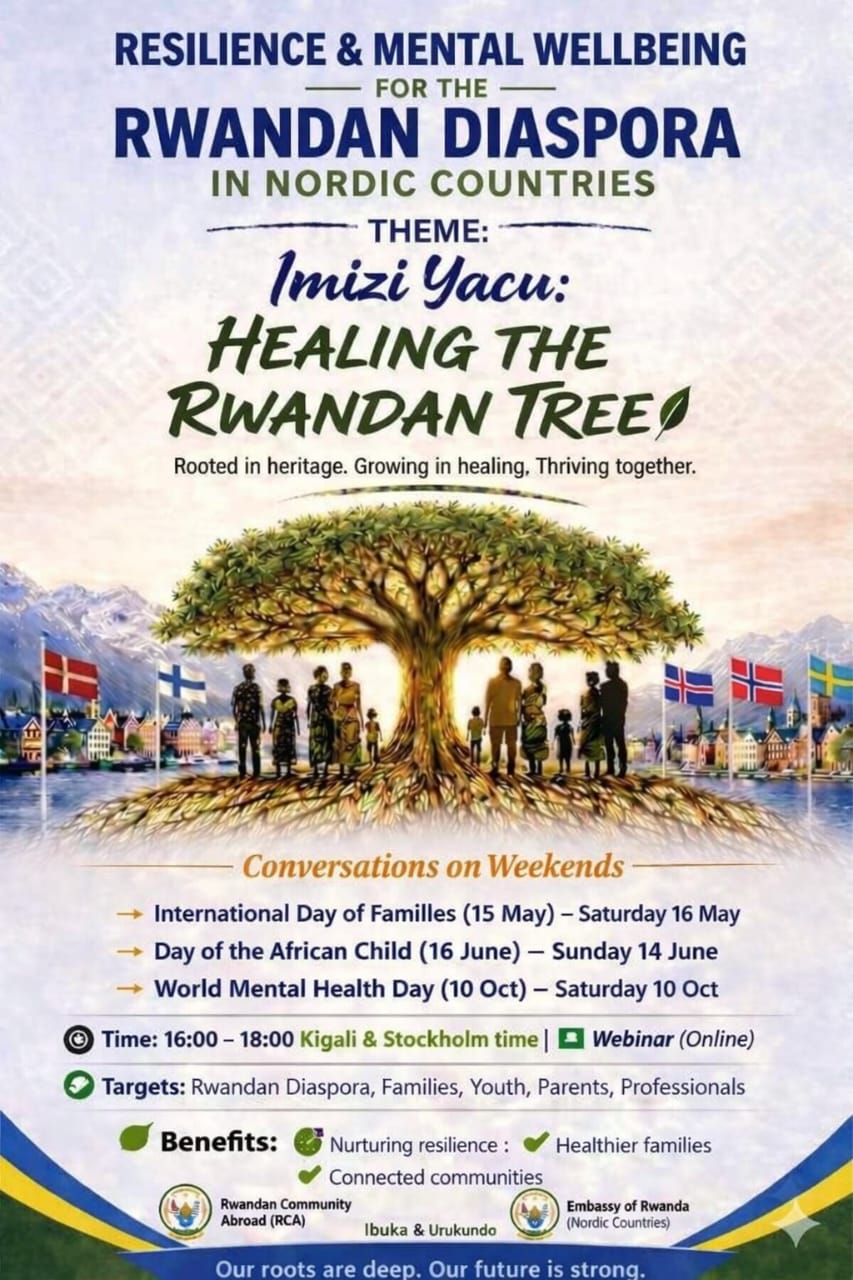
IMIZI YACU: Healing the Rwandan Family Tree Across the Nordic Countries
Embassy Visits Uppsala Centre for Holocaust and Genocide Studies, Exploring Pathways for Academic Collaboration

Seminar on Remembrance, Unity and Renewal Held at Umeå University
