
Norway Marks Kwibuka32: 300 Gather in Oslo to Honour Victims of the 1994 Genocide against the Tutsi
The Embassy of Rwanda to the Nordic Countries, represented by First Counsellor Geraldine Umutesi, joined Urukundo – Norway, the Association of Survivors of the 1994 Genocide against the Tutsi, the Rwandan community in Norway, and friends in Oslo to mark the 32nd Commemoration of the 1994 Genocide against the Tutsi. The event brought together some 300 attendees, paying tribute to the victims and standing in solidarity with survivors and with Rwanda.
The commemoration was marked by powerful testimonies, deep connections with loved ones lost simply for being Tutsi, and a strong commitment to Rwandans' unity. Rwandans living in Norway reaffirmed their resolve to ensure “Never Again,” to honour Rwandans' resilience, and to never take for granted the sacrifice of the brave men and women who stopped the genocide, rescued, and continue to keep Rwanda safe: the Rwanda Patriotic Army – Rwanda Defence Force.
Felix Muhigana, President of Urukundo Association, spoke to the responsibility shared by all present:
“Preserving memory is our duty. Standing against genocide ideology is our responsibility. Protecting vulnerable communities is our shared humanity.”
First Counsellor Geraldine Umutesi reflected on what remembrance demands of the community:
“Remembrance unites us. It calls us to uphold dignity, protect truth, and build partnerships rooted in respect and shared understanding.”
Pastor Natacha Gatete, President of the Rwandan Community in Norway, led the gathering in prayer:
“In silence, we honour the lives of one million Tutsi taken. In the flame, we honour the hope that endures. May remembrance strengthen our compassion and guide us toward unity, dignity, and truth.”
A Youth Tribute remembered the children killed during the Genocide against the Tutsi:
“We remember, we speak the names of the children we lost so their stories never fade. Memory is our promise to them. We carry forward the values of humanity, courage, and resilience.”
Panellists reminded the audience that prevention begins long before atrocity:
“Genocide is a process, not an event. Prevention begins the moment we challenge discrimination, dehumanisation, and silence.”
A tribute was paid to the soldiers of the Rwanda Patriotic Front, formerly the Rwanda Patriotic Army, led by H.E. Paul Kagame, who rescued the Rwandan people and continue to protect them: their sacrifice was seen, it was felt, and it will never be forgotten. The community pledged to carry that life forward with responsibility, never taking the peace it secured for granted, and to honour that sacrifice not only with words but through the lives built because of what it made possible.
Genocide survivor Josée Butera offered her testimony:
“To remember is painful, but to forget would be a betrayal. I speak so that humanity may choose compassion over hatred.”
The commemoration also featured the presence of two men whose personal connections to Rwanda shaped a deep commitment to a world free of discrimination. Anders Mellerud, a teacher at Tangen School in Kristiansand, spoke about the transformative journey of his students who visited Rwanda at the invitation of the Ishami Foundation to learn from its history and resilience, sharing touching moments from his encounters with genocide survivors and the importance of listening, learning, and bearing witness.
Lars Arrhenius, Sweden's Discrimination Ombudsman, shared his personal experience of discrimination against the Tutsi that he witnessed growing up in Karongi, Rwanda, in the 1960s and 1970s, and presented his book, dedicated to his nanny, who was killed during the Genocide against the Tutsi. The Lion Ant: My Rwandan Sisters, Dead and Alive added an important dimension of remembrance through literature, highlighting the role of storytelling in preserving memory and educating future generations.
Topics

Harvesting Two Decades of Cooperation and Partnership: Rwanda and the Nordics

Sweden Launches New Development Cooperation Strategy for Rwanda 2026–2031
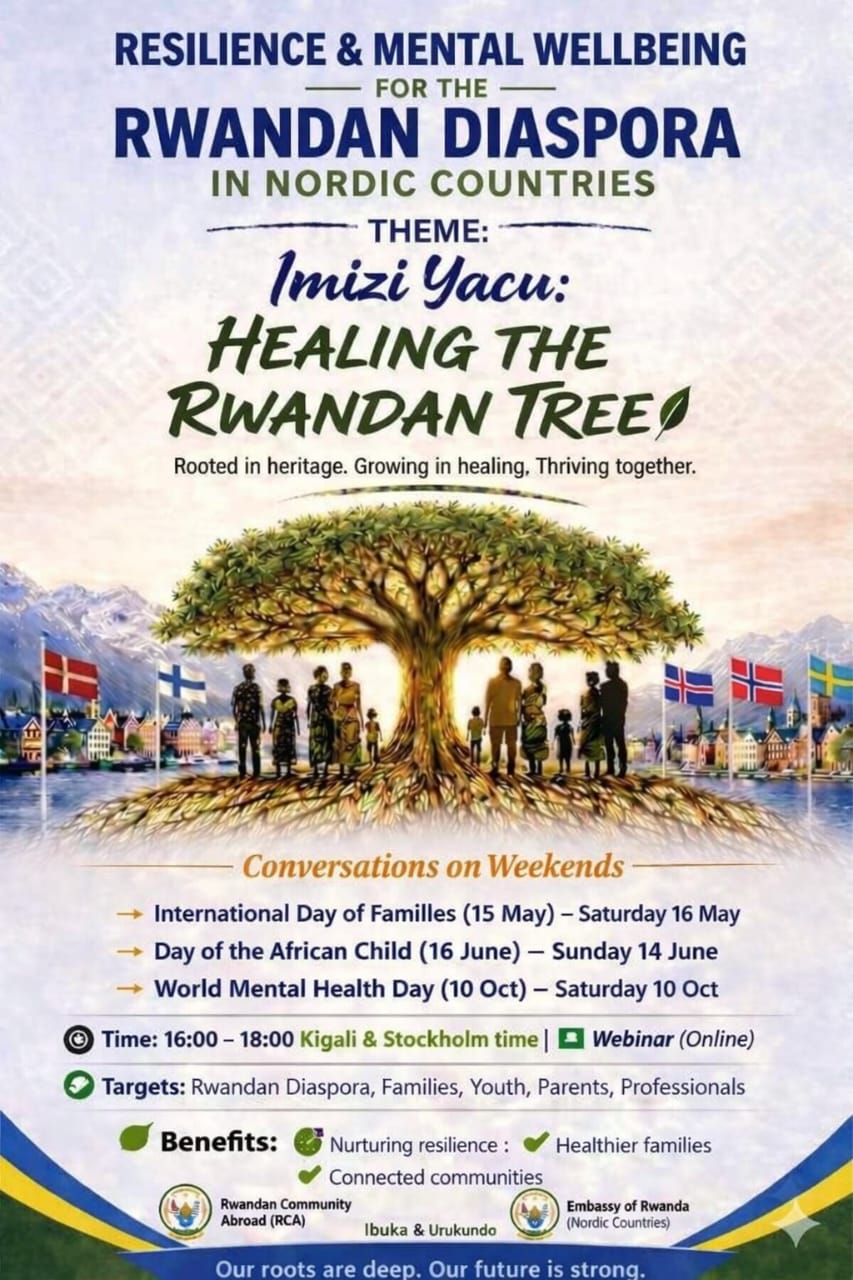
IMIZI YACU: Healing the Rwandan Family Tree Across the Nordic Countries
Embassy Visits Uppsala Centre for Holocaust and Genocide Studies, Exploring Pathways for Academic Collaboration

Seminar on Remembrance, Unity and Renewal Held at Umeå University
